| LovelandPolitics.com a non-partisan website about Loveland politics for residents concerned about our community's quality of life. Send us your story or comment on the blog. |


 |  |  |  |  |  |  |  |  |  |
| City Council To Ponder Budget Options Off-Site May Focus On Unrealistic Revenue Projections |
Projections include new sales tax revenues from projects like Grand Station in Centerra (that don't exist) while ignoring the
capital costs of providing necessary emergency services -- if indeed Grand Station is ever built. The same forecasts predict a
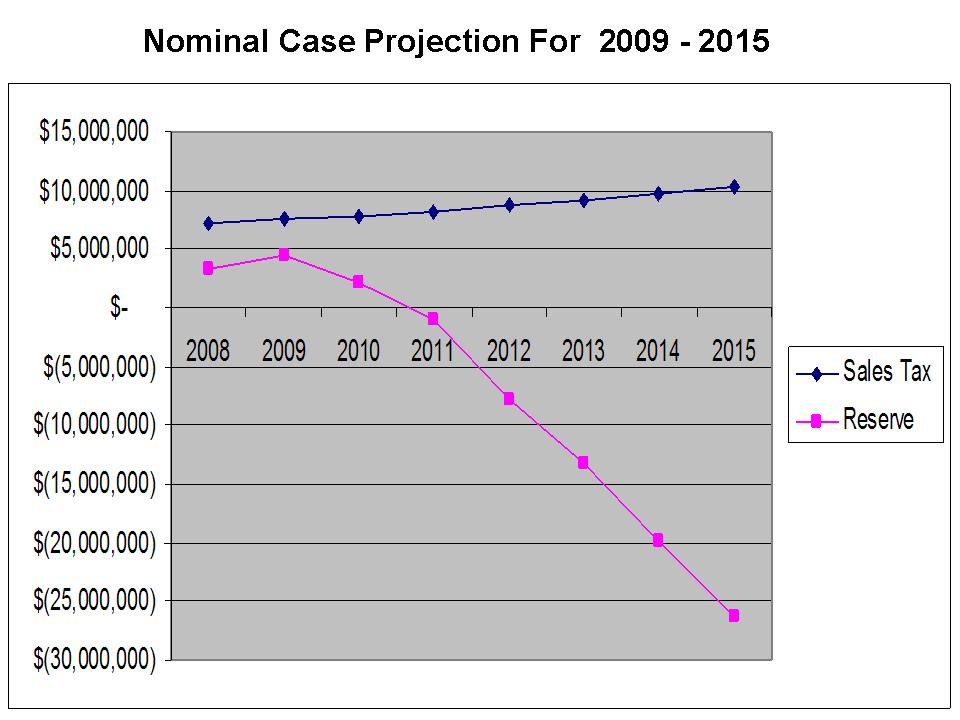
budget shortfall and deficit spending beginning in 2010 that could go as high as $50 million per year by 2015.
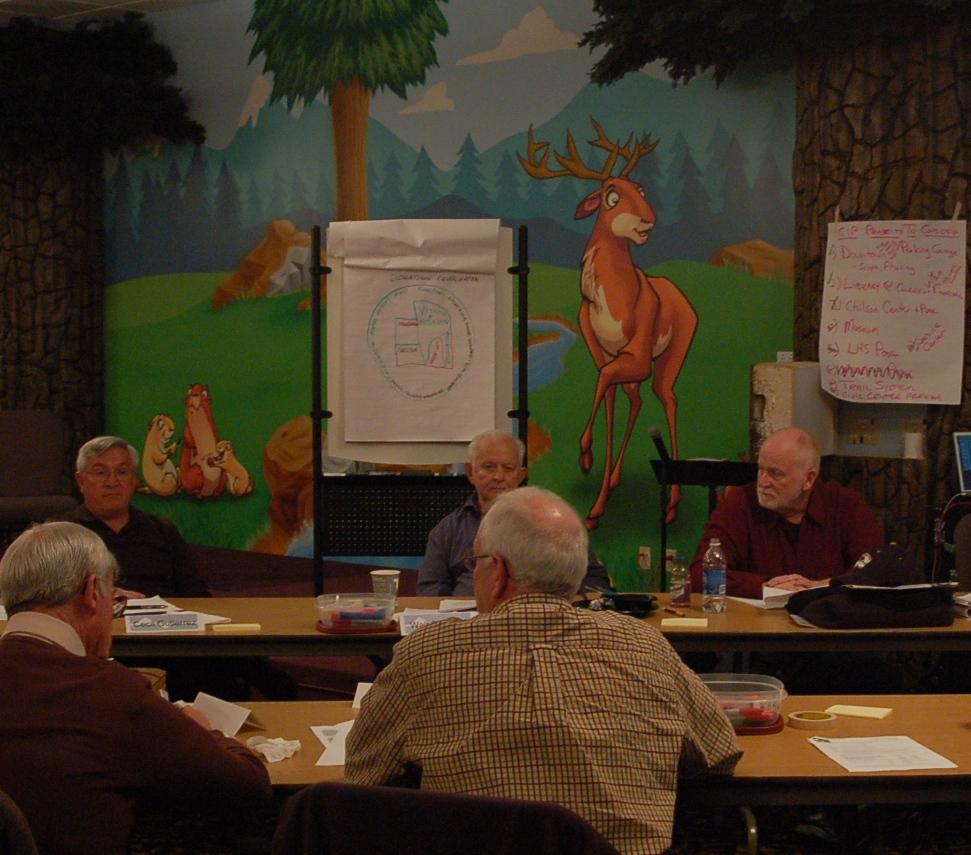
The City Council will review three slightly different financial scenarios in detail this Friday and Saturday (Jan. 9-10) during their
annual off-site study session. The off-site meeting will be held in Loveland at Group Publishing. By law, the meeting is open to
the public so anyone interested can attend the public meeting. Public comment, however, isn't allowed so be prepared to just
listen. Click here for an agenda of the meeting. Attached is the memo dated December 16, 2008 explaining the slight
variations in the three scenarios to be presented to council.
All three scenarios from best to worst include Grand Station being delayed only one year. The worst scenario projects a 5%
decrease in sales tax from 2008 levels but quickly recovers in 2010 and beyond due, in part, to new revenue from Grand
Station. None of the scenarios being presented to council include projections based solely on sales from existing retailers but
instead rely on future growth assumptions. Calling these "conservative" projections when they rely on retail buildings not even
constructed generating sales tax revenue is terribly misleading. The reality is that Grand Station couldn't get off the ground
even in the best of times. To depend on revenue from a project that was indefinitely postponed during good economic times is
to provide the Loveland City Council with faulty analysis and unrealistic projections.
In addition, the various revenue projections contain assumptions that are inconsistent with the capitalization and spending side
of the same plans. If you are looking at revenue assumptions – growth is the key because it assumes Grand Station in
Centerra will be built and the city will see an increase in sales tax revenue. If you look at the capitalization plan, the new “East
Fire Station” is not funded significantly in the next five years because the assumption is Grand Station is not going to be built in
the next five years. The City Council has already allowed McWhinney an additional 850 residential units to be built East of I-
25 bringing the total potential number of residential properties to over 3,000. The residential properties by themselves do not
create sales tax revenue but certainly require some modest protection by Loveland's fire department.
The worst part is that the financial outlook for the city in Williams’ budget projections does not balance after 5 years even in
the best case scenario but instead shows deficit spending starting 2010 and growing to $16 million by 2014.
Hiding Sins Of The Past
Don Williams, according to sources in city hall, is trying to prohibit any mention by staff of the money he had the city "borrow"
from the CEF's (Capital Expansion Funds) in 2007 to purchase 98 acres of open land near I-25. The city bought the property
at a price the owner was unable to sell it for during the peak after two years on the market. Now city taxpayers are stuck in a
property that will be difficult to sell along with water shares that are worth less than half of what the city paid.
The money to purchase the land was taken from CEF's intended for a new fire station, fire equipment and from the parks and
recreation funds. Read the stories from Oct. 2007 and Nov 2007 on how the city manager pushed for the purchase through a
lame duck session of the former city council. Now that development has slowed down and the CEF's are receiving less
funding from development fees, Williams wants to avoid a "what if" discussion where councilors discover taxpayer's were
shortchanged.
The revised Capital Improvement Plan delays significant infrastructure projects that are necessary but will no longer be
receiving adequate funding to stay on schedule. This will translate into Loveland residents having to adjust to a more crowded
and larger city without the commensurate growth in public services. The balance between population and services is often
measured as the "quality of life" metric in communities. In other words, expect quality of life for residents to decline as services
are under funded and the number of users increase.
No Money For Downtown - Property Tax On All Property Owners Considered
Despite finding millions of dollars sitting around for acquisition of property along the 402, grease payments for annexation deals
and other unpopular expenditures last year and the year before, Williams is now telling the council there isn't enough money
available to fund improvements for Loveland's old downtown unless they raise taxes or create more debt.
Staff has prepared a memorandum for the offsite discussions suggesting 3 ways to fund improvements for downtown. The
total cost of planned future improvements plus more necessary items like utility upgrades (electrical undergrounding and
updating water and sewer lines) is estimated between $17 million and $23 million.
The first option is a "pay as you go" scenario where a little extra money is preserved each year from the budget to make the
improvements. However, this option would delay the start of significant improvements to 2013 or 2014 and still only projects
raising $13.6 million. The second proposed option for consideration by council is a general property tax increase for Loveland
homeowners and the third is creating a "line-of-credit" through the existing Urban Renewal District for downtown.
The City Council will be asked to consider the various options at the off-site on how they want to proceed. Because the
Urban Renewal Authority is considered another "mini-government" Williams is likely to argue that debt for the Authority
shouldn't be considered as debt for the city. In fact, Loveland's bond ratings will be effected if any of its "mini-governments"
created by council defaults on bonds or any other debt instrument. Given the high level of debt already created through the
Master Finance Agreement with McWhinney, Loveland's bond rating is critical to other projects raising money.
Service Cuts For Residents
The City of Loveland appears to have enough money for 2009 but not 2010 and beyond. Williams is rumored to be planning
retirement in 2009 because he pushed so aggressively to have the city fully cover any medical costs he might incur if he retires
before qualifying for Medicare.
A December 16, 2008 memorandum being presented to council for the off-site states, "……it may be necessary for Council to
consider service reductions to include in the 2010 Budget. We propose a study session in late spring to begin the 2010 Budget
process for Council to provide direction to Staff on service priorities and potential services to be eliminated."
"……it may be necessary for Council to consider service reductions to include in the 2010 Budget. We propose a study session in late spring to begin the 2010 Budget process for Council to priorities and potential services to be eliminated." Decemebr 16, 2008 Memo from Renee Wheeler to Don Williams |
“In this option, the primary method of paying for downtown improvements would be the issuance of general obligation bonds to be repaid from property taxes levied on all property in the City.” December 16 Memo to City Manager from Finance Director |
| Program based on the revenue assumptions included." Renee Wheeler December 16, 2008 Memo |