| LovelandPolitics.com |

| Krcmarik Wants City To Look At Investing In Brazil's Foreign Debt As a hedge against a weakening dollar and possible lower rating of U.S. Treasuries suggests foreign bonds may be safer place for city reserves according to Krcmarik |
Loveland -- April 12, 2010
Alan Krcmarik, Loveland’s Executive Financial Advisor, suggested the city begin taking a look at buying
foreign bonds to hedge off future U.S. Dollar inflation and in reaction to a rumor that Moody’s may soon
downgrade the rating of U.S. Treasuries. Krcmarik mentioned both Germany and Brazil when recanting
for the Loveland City Council last Tuesday comments he heard while attending a financial seminar of where
to buy bonds that can provide a better return in the future.
Like many cities, Loveland manages a sizable investment portfolio of mostly funds collected through utility
payments, development fees and special taxes that cannot be disbursed into the city’s general fund.
Colorado State law not only mandates how reserve money is to be invested but also restricts the city’s use
of the money given the circumstances under which it was collected. Therefore, Loveland’s “reserve fund”
is really mostly funds like CEF’s (Capital Expansion Fees) that must be spent for the narrow purposes it
was collected. As the city waits to collect enough reserves for a particular project the money must be
invested in high quality, low risk securities thus limiting the overall return the city can expect to receive on
investments made with those monies. This because preservation of principle is paramount in municipal
investments.
Loveland’s $191 million reserve consists mostly of money collected through special assessments or fees
that is not available to be used in the city’s general fund. CEF’s collected for capital expansion of city
services from new construction in previous years is now approximately $44 million of the reserve while
restricted monies collected through enterprise funds, utilities and other similar sources tops $100 million.
As an example, the city has $27 million in Water Revenues, $6 million for a Power Plant and another $5
million put aside from Water System Impact Fees.
While these amounts may appear large to the average person, many of the balances are only a fraction of
the money required to finance the specific improvement, utility or future equipment purchase they were set
aside to fund.
Investing public tax dollars in foreign governments is not a new idea. The State of Florida along with a
number of municipalities in Florida have long invested in financial instruments with higher than average
returns sold by the Government of Israel. Florida, with a large retired Jewish population, has been a
popular target for the companies representing Israeli bonds to market their products. Whether Loveland
residents will be comfortable knowing their city is investing in Brazil's external debt is another matter.
In the 1980's Brazil was the poster child of bad foreign debt as it defaulted on billions of dollars in bank
loans guaranteed by Brazil's central government. Now reformed, Brazil is still a country struggling with
ungovernable "favelas" or slums outside its major cities and a rising crime rate. The suggestion that debt
backed by Brazil's government can be more stable than that of the U.S. Treasury is unsettling. Germany,
while politically more stable, is suffering a crisis of its own as the Greek financial mess threatens again to
lower the value of the shared European currency -- the Euro.
Real ‘Reserves’ For The General Fund
Loveland started 2010 with over $14 million in restricted general fund reserves which has now dropped to
only $10 million or approximately 5% of all the reserves reported. Krcmarik’s monthly snapshot report to
council shows that account losing approximately $400,000 but the balance is reduced even further while
the unrestricted general fund account grew by approximately $4 million indicating the city may have
transferred general fund reserve into the unrestricted account in anticipation of using the formerly restricted
general reserve funds to cover any spending that exceeds revenue in 2010.
While the CEF's and other restricted funds are not supposed to be used to cover general fund or
discretionary spending items the city has used some creative book keeping in the past to bypass those
restrictions imposed by state law. Loveland’s previous city council and current City Manager Don
Williams tapped into the CEF reserve to purchase 97 acres of vacant land along the I-25 and 402 by
calling the transfer of funds a “loan” which is now being paid back with interest from the city’s general
operating funds. Krcmarik’s monthly “snapshot” of city reserves curiously fails to make any note of the
borrowed millions in CEF funds or the return that is being earned by the city’s unusual loan to itself of
those funds.
Loveland’s Current Investing Strategy
Krcmarik told the Loveland City Council last Tuesday that he has been looking to keep more funds in 2-5
year U.S. Treasuries in anticipation of increasing interest rates. Loveland’s investment strategy is to avoid
longer-term commitments at current low interest rates by keeping funds liquid or in short-term bonds thus
ready to invest when interest rates begin increasing. What some on the council may have not expected to
hear is that such longer-term instruments could be Brazil or Germany’s foreign debt and not U.S. Treasury
bonds. Krcmarik said he would, “look into” using the foreign debt of Germany or Brazil for future city
investments. Whether or not he plans on bringing this idea to the Citizen’s Finance Advisory Commission
for consideration was not mentioned.
Short term rates on government bonds have remained low recently (2-year .82% and 5 year 2.34%) thus
limiting the city’s ability to reach their investment goal of achieving an average return of 2.75%. U.S.
Agency Bonds account for over 63% of Loveland’s invested portfolio while just over 22% is kept in liquid
accounts like money market funds and another 10% is invested in corporate bonds.
CFAC – Citizens’ Finance Advisory Commission
Last month 5 members of Loveland’s Citizens’ Finance Advisory Commission (CFAC) voted to establish
an “Outreach Subcommittee” to identify speaking opportunities in Loveland for citizens who serve on
CFAC. Loveland's investment strategy and whether the city will invest in foreign currency debt in the
future would be an interesting topic for members of CFAC to discuss with the pubic.
Another suggestion that the commission expand the membership to 11 to allow for alternates was not
adopted due to the fact the commission has had a difficult time filling the 9 member commission seats
already.
CFAC’s goal is to recruit more candidates to serve on the 9 member commission while educating the
public about the role of CFAC in the “governance of the City of Loveland.”
CFAC meets the second Wednesday of each month at 6:00 PM in the City Council Chambers, 500 East
Third Street. The commission reviews the city’s annual budget, reviews financial reports, recommends
auditors for the city and provides input to the city council regarding Loveland’s financial policies in general.
Historically, the commission has served mostly as a sounding board for staff generated ideas that later
flowed to Loveland’s City Council for approval. As volunteers often with limited time, the impact the
commission has on Loveland’s overall financial and investing policies has been limited.
Whether or not the city begin looking overseas for higher returns in government bonds has not yet reached
the agenda of CFAC to provide input to the city council.
Alan Krcmarik, Loveland’s Executive Financial Advisor, suggested the city begin taking a look at buying
foreign bonds to hedge off future U.S. Dollar inflation and in reaction to a rumor that Moody’s may soon
downgrade the rating of U.S. Treasuries. Krcmarik mentioned both Germany and Brazil when recanting
for the Loveland City Council last Tuesday comments he heard while attending a financial seminar of where
to buy bonds that can provide a better return in the future.
Like many cities, Loveland manages a sizable investment portfolio of mostly funds collected through utility
payments, development fees and special taxes that cannot be disbursed into the city’s general fund.
Colorado State law not only mandates how reserve money is to be invested but also restricts the city’s use
of the money given the circumstances under which it was collected. Therefore, Loveland’s “reserve fund”
is really mostly funds like CEF’s (Capital Expansion Fees) that must be spent for the narrow purposes it
was collected. As the city waits to collect enough reserves for a particular project the money must be
invested in high quality, low risk securities thus limiting the overall return the city can expect to receive on
investments made with those monies. This because preservation of principle is paramount in municipal
investments.
Loveland’s $191 million reserve consists mostly of money collected through special assessments or fees
that is not available to be used in the city’s general fund. CEF’s collected for capital expansion of city
services from new construction in previous years is now approximately $44 million of the reserve while
restricted monies collected through enterprise funds, utilities and other similar sources tops $100 million.
As an example, the city has $27 million in Water Revenues, $6 million for a Power Plant and another $5
million put aside from Water System Impact Fees.
While these amounts may appear large to the average person, many of the balances are only a fraction of
the money required to finance the specific improvement, utility or future equipment purchase they were set
aside to fund.
Investing public tax dollars in foreign governments is not a new idea. The State of Florida along with a
number of municipalities in Florida have long invested in financial instruments with higher than average
returns sold by the Government of Israel. Florida, with a large retired Jewish population, has been a
popular target for the companies representing Israeli bonds to market their products. Whether Loveland
residents will be comfortable knowing their city is investing in Brazil's external debt is another matter.
In the 1980's Brazil was the poster child of bad foreign debt as it defaulted on billions of dollars in bank
loans guaranteed by Brazil's central government. Now reformed, Brazil is still a country struggling with
ungovernable "favelas" or slums outside its major cities and a rising crime rate. The suggestion that debt
backed by Brazil's government can be more stable than that of the U.S. Treasury is unsettling. Germany,
while politically more stable, is suffering a crisis of its own as the Greek financial mess threatens again to
lower the value of the shared European currency -- the Euro.
Real ‘Reserves’ For The General Fund
Loveland started 2010 with over $14 million in restricted general fund reserves which has now dropped to
only $10 million or approximately 5% of all the reserves reported. Krcmarik’s monthly snapshot report to
council shows that account losing approximately $400,000 but the balance is reduced even further while
the unrestricted general fund account grew by approximately $4 million indicating the city may have
transferred general fund reserve into the unrestricted account in anticipation of using the formerly restricted
general reserve funds to cover any spending that exceeds revenue in 2010.
While the CEF's and other restricted funds are not supposed to be used to cover general fund or
discretionary spending items the city has used some creative book keeping in the past to bypass those
restrictions imposed by state law. Loveland’s previous city council and current City Manager Don
Williams tapped into the CEF reserve to purchase 97 acres of vacant land along the I-25 and 402 by
calling the transfer of funds a “loan” which is now being paid back with interest from the city’s general
operating funds. Krcmarik’s monthly “snapshot” of city reserves curiously fails to make any note of the
borrowed millions in CEF funds or the return that is being earned by the city’s unusual loan to itself of
those funds.
Loveland’s Current Investing Strategy
Krcmarik told the Loveland City Council last Tuesday that he has been looking to keep more funds in 2-5
year U.S. Treasuries in anticipation of increasing interest rates. Loveland’s investment strategy is to avoid
longer-term commitments at current low interest rates by keeping funds liquid or in short-term bonds thus
ready to invest when interest rates begin increasing. What some on the council may have not expected to
hear is that such longer-term instruments could be Brazil or Germany’s foreign debt and not U.S. Treasury
bonds. Krcmarik said he would, “look into” using the foreign debt of Germany or Brazil for future city
investments. Whether or not he plans on bringing this idea to the Citizen’s Finance Advisory Commission
for consideration was not mentioned.
Short term rates on government bonds have remained low recently (2-year .82% and 5 year 2.34%) thus
limiting the city’s ability to reach their investment goal of achieving an average return of 2.75%. U.S.
Agency Bonds account for over 63% of Loveland’s invested portfolio while just over 22% is kept in liquid
accounts like money market funds and another 10% is invested in corporate bonds.
CFAC – Citizens’ Finance Advisory Commission
Last month 5 members of Loveland’s Citizens’ Finance Advisory Commission (CFAC) voted to establish
an “Outreach Subcommittee” to identify speaking opportunities in Loveland for citizens who serve on
CFAC. Loveland's investment strategy and whether the city will invest in foreign currency debt in the
future would be an interesting topic for members of CFAC to discuss with the pubic.
Another suggestion that the commission expand the membership to 11 to allow for alternates was not
adopted due to the fact the commission has had a difficult time filling the 9 member commission seats
already.
CFAC’s goal is to recruit more candidates to serve on the 9 member commission while educating the
public about the role of CFAC in the “governance of the City of Loveland.”
CFAC meets the second Wednesday of each month at 6:00 PM in the City Council Chambers, 500 East
Third Street. The commission reviews the city’s annual budget, reviews financial reports, recommends
auditors for the city and provides input to the city council regarding Loveland’s financial policies in general.
Historically, the commission has served mostly as a sounding board for staff generated ideas that later
flowed to Loveland’s City Council for approval. As volunteers often with limited time, the impact the
commission has on Loveland’s overall financial and investing policies has been limited.
Whether or not the city begin looking overseas for higher returns in government bonds has not yet reached
the agenda of CFAC to provide input to the city council.

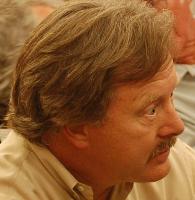
| Alan Krcmarik, Loveland's Executive Financial Advisor |